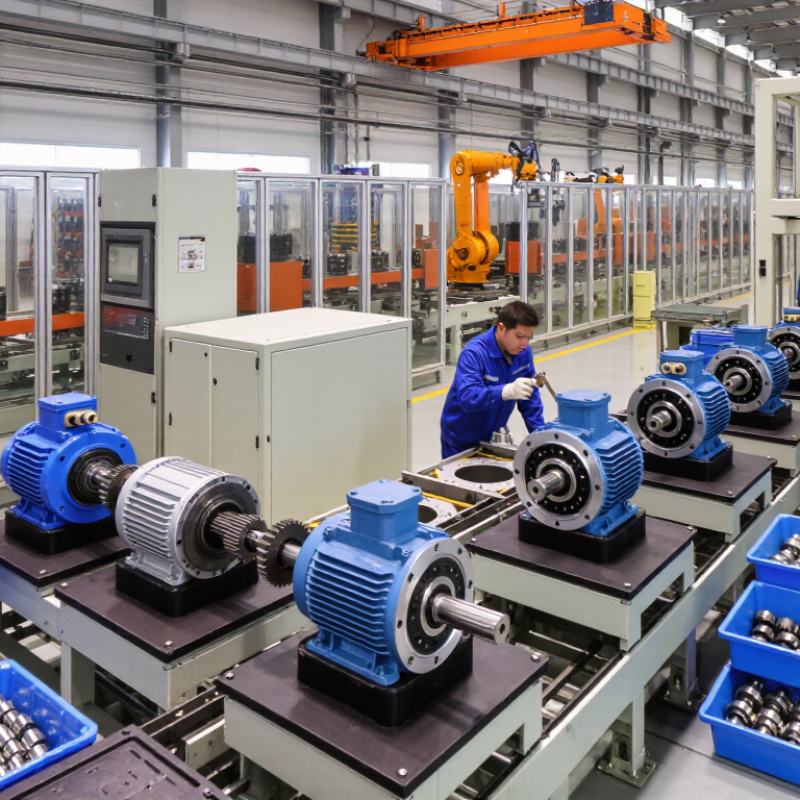
Choosing the best Geared Electric Motor manufacturers in China requires more than comparing catalog prices. Buyers should examine engineering capability, production consistency, testing methods, and after-sales support. A suitable supplier must match the motor to the application, not simply offer the highest power rating.
Practical evaluation begins with the gearbox design. Check rated torque, speed range, duty cycle, efficiency, braking needs, and mounting dimensions. Ask how suppliers measure noise, vibration, temperature rise, and gear backlash. Factory audits can reveal important details, including assembly cleanliness, component storage, and final inspection procedures. Documentation also matters. Look for traceable test records, clear drawings, material information, and recognized quality systems.
Real projects often expose weaknesses that brochures do not show. A motor may perform well during a short demonstration but overheat after continuous operation. Lead times may also change when customized shafts, encoders, or connectors are required. No supplier is perfect. Even experienced buyers can overlook maintenance access or local service capacity. That is why this guide compares manufacturers through technical evidence, manufacturing experience, customer communication, and long-term reliability. The discussion focuses on companies capable of supporting standard and customized Geared Electric Motor requirements across automation, conveyors, packaging equipment, robotics, and other industrial applications. Readers should verify current certifications, sample performance, warranty terms, and export documentation before making a final decision. A careful choice saves more than purchase cost. It can reduce downtime, replacement work, and production uncertainty.
GB 18613-2020 sets energy-efficiency requirements for specified small and medium three-phase asynchronous motors. Its 0.12–1,000 kW range is broad, but it is not a blanket rule for every geared motor. The motor’s voltage, frequency, pole count, and design must also fit the standard’s scope. Buyers should check the motor’s rated output and efficiency grade, rather than assume the complete gearmotor is covered.
The distinction matters. A gearbox adds losses, while load, speed, and duty cycle shape real energy use. The International Energy Agency’s Energy Efficiency 2023 report estimates that motor systems consume about 53% of global electricity. Small efficiency gains can therefore matter across long operating hours. Ask manufacturers for test reports and separate motor and gearbox efficiency data. A nameplate claim alone is thin evidence.
In a factory, compare the rating with the actual operating point: a 7.5 kW motor running a conveyor at variable load may not perform like a laboratory test setup. I would also ask how the supplier verifies efficiency across production batches. The standard gives a useful baseline, not the whole answer. That gap deserves attention.
Choosing a geared electric motor starts with motion, not a catalog label. Helical units suit steady, quiet operation and high efficiency. Worm gears turn motion through a right angle in a compact package, but sliding contact can create heat and lower efficiency. Watch the temperature.
Bevel gears also redirect power, often at 90 degrees, while planetary designs combine coaxial input and output with high torque density. That makes planetary gearing useful where space is tight and loads are demanding. The trade-off is more complex inspection and repair. IEA’s 2011 report, Energy-Efficiency Policy Opportunities for Electric Motor-Driven Systems, estimates motor-driven systems use about 45% of global electricity. The U.S. Department of Energy’s industrial motor-system sourcebook puts their share at roughly 68% of U.S. manufacturing electricity. These figures cover motor systems broadly, not geared motors alone.
For a real selection, compare reduction ratio, duty cycle, shock load, lubrication access, and heat dissipation. A compact worm unit may fit neatly beneath a conveyor, yet run hotter during long shifts. A planetary unit can deliver substantial torque, but its service needs deserve attention. I would not choose by efficiency figures alone; actual performance depends on load, installation, and maintenance. That detail is easy to underestimate.
When comparing geared electric motor manufacturers in China, check the efficiency class at the motor’s rated output and operating frequency. IE2, IE3, and IE4 indicate different efficiency levels, but a class alone does not show energy use at every load. Request test data, nameplate details, and the applicable test standard. A motor running far below its rated load may not deliver the expected savings. Small details matter.
Match the IP rating to the installation. IP55, for example, offers protection against dust ingress and water jets under specified test conditions; it does not guarantee resistance to corrosive chemicals or outdoor weathering. Ask what seals, cable entries, and enclosure materials are included. Duty class matters just as much. S1 is continuous duty, while intermittent cycles such as S3 require attention to run time, rest time, and starts per hour. Check the gearbox’s thermal limits too. A motor may meet its efficiency target yet overheat in a compact, poorly ventilated installation. Request a duty-cycle calculation for the actual load and ambient temperature. Paper specifications can look neat; real operating conditions are less tidy.
For buyers comparing Chinese geared electric motor manufacturers, certifications matter only when their scope matches the exact product and destination market. Check the certificate holder, model range, issuing body, and expiry date. An ISO 9001 certificate concerns a company’s quality system; it does not certify every motor’s performance. Request applicable conformity documents, test reports, and ratings for the specific geared motor. Small details matter, such as voltage, enclosure protection, and operating temperature.
Export data can add useful context, but it needs careful interpretation. Compare shipment records across several years, where reliable records are available, and check product descriptions, destination markets, and shipment frequency. Customs classifications may group different motor types together. A high shipment value alone does not prove consistent quality or strong after-sales support. Paperwork can lag. That matters.
A practical review connects records to physical evidence: a nameplate photo, a sample test report, and a packing list with matching model numbers. Ask whether the supplier can explain gaps between certificate scope and export descriptions. Some data may be incomplete or commercially restricted, so treat it as one evidence source, not a verdict. Buyers should record what was verified and what still needs confirmation.
IEC efficiency-class benchmarks for a 0.75 kW, four-pole motor at 50 Hz: IE1 75.9%, IE2 82.5%, IE3 84.0%, and IE4 85.5%. These figures describe the motor under the specified test conditions, not the overall efficiency of a geared motor assembly. They are standards benchmarks, not manufacturer certification or export data.
Reference: IEC 60034-30-1.
A useful buyer scorecard begins with the actual duty cycle, not a headline torque figure. Record the load, start frequency, operating hours, and ambient temperature. Torque must cover startup peaks as well as steady operation. Ask for the gearbox ratio, output speed, and a clear explanation of any service factor. Numbers matter. But assumptions matter too.
Service life estimates are only meaningful when their test conditions resemble your installation. Request maintenance intervals, lubrication guidance, and evidence from comparable operating conditions. Lead time should include motor configuration, inspection, packing, and shipping—not just factory assembly. Compare the same delivery terms across quotations. Check whether critical parts are stocked and how technical questions are handled after delivery. Cost includes purchase price, energy use, maintenance, and downtime. A lower quote can become expensive if a shaft seal fails early. Warranty terms deserve close reading: confirm coverage, exclusions, claim documents, and response expectations in writing. No scorecard predicts every failure, and buyers sometimes overrate precise-looking figures. Leave room for uncertainty, and verify the details before placing an order.
| Evaluation dimension | Weight | What to verify | Buyer-defined scoring guide (1–5) | Evidence to request |
|---|---|---|---|---|
| Rated output torque | 30% | Confirm continuous output torque at the required speed, duty cycle, mounting position, and ambient conditions. Check starting, peak, and service-factor requirements separately. | 5: documented continuous rating meets or exceeds the project requirement with stated margin; 3: meets the requirement with limited margin; 1: rating is missing or below requirement. | Motor and gearbox datasheets, operating-point calculation, and written confirmation of duty conditions. |
| Service life and reliability | 25% | Assess the stated design life and its assumptions. Gearbox life depends on load, speed, lubrication, temperature, alignment, and maintenance; bearing life calculations are not the same as guaranteed unit life. | 5: life estimate and assumptions are documented and fit the application; 3: partial data or material assumptions need confirmation; 1: no usable life or reliability information. | Life calculation or test report, lubrication and maintenance schedule, materials, and applicable test conditions. |
| Production and shipping lead time | 15% | Separate sample, production, inspection, and transit time. Confirm whether the quoted schedule starts after drawing approval, deposit, or receipt of specifications. | 5: dated schedule with milestones and a confirmed shipment window; 3: estimated schedule with key dependencies stated; 1: no clear schedule or important timing exclusions. | Written lead-time breakdown, production-slot confirmation, shipping terms, and escalation contact. |
| Total cost of ownership | 15% | Compare equivalent configurations and include unit price, tooling or customization, packaging, freight, duties, commissioning, expected maintenance, and replacement costs. | 5: lowest comparable evaluated total cost with complete inclusions; 3: competitive price but some cost items remain unconfirmed; 1: quote is not comparable or has substantial exclusions. | Itemized quotation, Incoterm, payment terms, spare-parts pricing, and a written list of exclusions. |
| Warranty and after-sales support | 15% | Check coverage period, start date, remedy, exclusions, claim process, and responsibility for return freight. Warranty duration alone does not establish product reliability. | 5: clear written terms, practical claim process, and defined technical support; 3: standard written coverage with some unclear details; 1: vague, limited, or undocumented terms. | Warranty document, response-time commitment, service contact, and spare-parts availability statement. |
| Weighted total | 100% | Calculate each row as (score ÷ 5) × weight, then add the results. Maximum score: 100 points. Compare only quotes that meet the required technical specification. | ||
Start with the motion, load, and available space. Compare reduction ratio, duty cycle, shock load, lubrication access, and heat dissipation.
Helical gears suit steady, quiet operation and offer high efficiency. Worm gears turn motion through a right angle in a compact package, but sliding contact can create heat.
Planetary designs combine coaxial input and output with high torque density. They fit tight spaces and demanding loads, though inspection and repair can be more complex.
Yes. Bevel gears often redirect power through 90 degrees, which can suit layouts with a right-angle drive.
No. IE2, IE3, and IE4 indicate different efficiency levels, but actual use depends on load, operating frequency, installation, and maintenance. Ask for test data.
It indicates protection against dust ingress and water jets under specified test conditions. It does not guarantee resistance to corrosive chemicals or outdoor weathering.
S1 means continuous duty. For intermittent cycles such as S3, check run time, rest time, and starts per hour.
Yes. A poorly ventilated installation can run hot. Request a duty-cycle calculation using the actual load and ambient temperature. Real conditions can be untidy.
This guide explains how to evaluate a Geared Electric Motor manufacturer in China, beginning with the motor-efficiency scope associated with GB 18613-2020, which spans ratings from 0.12 to 1,000 kW. It outlines the practical differences among helical, worm, bevel, and planetary designs, including how gearbox type can affect torque, speed reduction, installation, and operating needs. Buyers can also compare IE2–IE4 efficiency levels, IP protection ratings, and duty classes to identify products suited to their applications and working environments.
The guide recommends assessing manufacturers through verifiable certifications and relevant export experience, then comparing suppliers against a consistent scorecard. Key considerations include required output torque, expected service life, production and delivery lead times, total cost, and warranty terms. Matching these factors to the actual operating conditions can help buyers narrow their options and make a more informed purchasing decision.
