China has become a major manufacturing base for industrial gear motors, supported by extensive machining, casting, electronics, and automation capabilities. According to Fortune Business Insights’ 2024 Gear Motors Market report, the global market was valued at more than USD 20 billion in 2023 and is expected to grow steadily through 2032. Grand View Research also identifies factory automation, material handling, and renewable-energy equipment as important growth areas.
This demand makes China an important sourcing destination for global buyers seeking a Powerful Gear Motor. However, low price alone proves very little. Buyers should examine torque curves, gearbox ratios, motor efficiency, thermal limits, noise levels, ingress protection, and documented endurance testing. IEC 60034 standards and ISO 9001 quality systems provide useful reference points, but certificates cannot replace factory audits or sample testing. Small details matter. A poorly sealed bearing can fail beside a dusty conveyor.
Reliability engineer Heinz P. Bloch has written, “Reliability is designed into equipment; it cannot be inspected into it.” His principle applies directly to gear motor selection. Strong Chinese suppliers usually provide application calculations, inspection records, traceable components, and responsive engineering support. Some suppliers still publish incomplete data, especially under changing loads. That deserves scrutiny. Global buyers should compare real test results, not attractive brochures. This guide examines leading Chinese suppliers through engineering capability, customization experience, compliance evidence, delivery performance, and after-sales support. The evaluation is practical, but no supplier ranking remains perfect forever. Industrial requirements change, and careful verification remains essential.
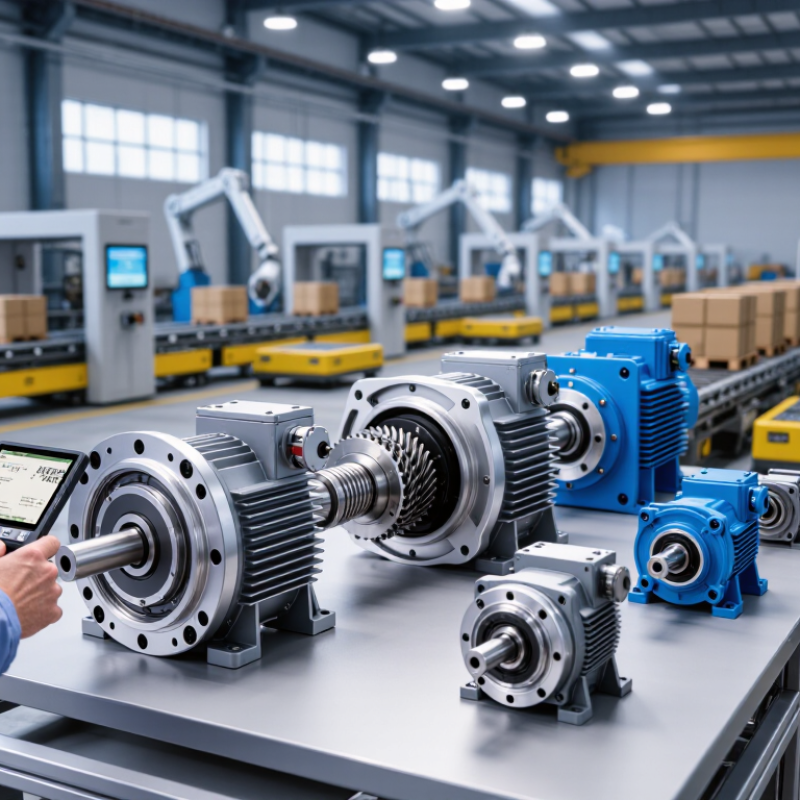
China’s strongest gear motor suppliers are defined by engineering evidence, not production volume. The IEA estimates electric motor systems consume about 53% of global electricity. That figure makes efficiency a purchasing issue, not a marketing detail. A capable supplier should provide torque curves, thermal limits, duty-cycle calculations, and measured efficiency. Ask for test records under your actual load. Not brochure values. IEC 60034-30-1 efficiency classes offer a useful comparison framework, although gearbox losses require separate checking.
A reliable Chinese supplier also controls gear machining, heat treatment, winding, assembly, and final inspection. The U.S. Department of Energy reports that motor-driven systems use over 70% of industrial electricity in the United States. Therefore, lifecycle efficiency deserves attention beyond the purchase price. Buyers should request IP rating evidence, insulation class, noise data, bearing life, and spare-parts policies. Experience appears in uncomfortable details, such as startup current at low temperatures or backlash after continuous operation. These questions expose weak engineering quickly.
However, no supplier is perfect. A power rating may be overstated when service factors, ambient temperature, and mounting position are ignored. Independent verification remains sensible for export projects. One practical improvement is requiring a witnessed load test before shipment, with recorded temperature, vibration, speed, and torque. This step costs time, but it can reveal problems that polished samples conceal.
| Evaluation Dimension | Typical Industrial Benchmark | Why It Matters to Global Buyers | Recommended Verification Evidence |
|---|---|---|---|
| Rated Motor Power | Approximately 0.12–315 kW for standard industrial gear motor configurations | Shows whether the supplier can support light-duty, continuous-duty, and heavy-duty applications. | Motor nameplate, rating sheet, thermal test records, and application load calculations |
| Output Torque Capability | Common industrial ranges extend from about 10 Nm to more than 50,000 Nm, depending on gearbox size and ratio | High torque is essential for conveyors, mixers, hoists, crushers, and other high-load machinery. | Rated torque curves, service-factor calculations, overload test data, and gearbox sizing documents |
| Gearbox Configuration | Helical, bevel-helical, worm, planetary, and parallel-shaft designs; reduction ratios commonly range from approximately 3:1 to 10,000:1 | Different machine layouts require different combinations of efficiency, compactness, torque, and mounting flexibility. | CAD drawings, dimensional drawings, ratio tables, mounting options, and application references |
| Motor Efficiency | IE3 high-efficiency motors are widely used; IE4 options are available for selected industrial applications | Higher efficiency reduces electricity consumption, operating temperature, and long-term ownership cost. | Efficiency test report, IEC 60034-30-1 classification, and motor performance curve |
| Protection Rating | IP55 is common for general industrial use; IP65 and higher may be specified for dusty or washdown environments | The correct ingress protection level helps prevent damage from dust, moisture, and water exposure. | IP test report, enclosure specification, sealing details, and installation instructions |
| Thermal and Insulation Performance | Class F insulation is common; Class H may be selected for higher-temperature or demanding duty conditions | Adequate thermal protection improves service life under continuous operation and frequent starting. | Temperature-rise test, insulation-class certificate, duty-cycle specification, and thermal protection details |
| Duty Rating | S1 continuous duty is standard for many industrial gear motors; S3–S6 duty ratings are used for intermittent applications | Matching the duty rating prevents overheating, premature wear, and unexpected downtime. | IEC duty-cycle declaration, operating profile review, and continuous-load test results |
| Gearbox Service Factor | A service factor of approximately 1.25–2.00 is commonly selected, depending on load type, starts per hour, and operating hours | A suitable service factor provides additional capacity for shock loads and demanding working conditions. | AGMA or ISO-based gear calculations, load classification, and gearbox selection report |
| Manufacturing Quality System | Documented quality management system aligned with ISO 9001:2015 | A controlled quality system improves consistency across materials, machining, assembly, and final inspection. | Valid certificate, scope of certification, process-control records, and audit documentation |
| Testing and Inspection | Routine checks should include no-load current, insulation resistance, vibration, noise, leakage, torque, and temperature performance | Comprehensive testing reduces field failures and supports reliable batch-to-batch performance. | Factory acceptance test report, calibrated-equipment list, inspection checklist, and traceability records |
| International Compliance | Relevant requirements may include CE, RoHS, IEC electrical standards, and destination-market safety regulations | Compliance supports customs clearance, machinery integration, and legal sale in overseas markets. | Declaration of conformity, technical file, test reports, and product-label photographs |
| Customization Capability | Options may include voltage, frequency, flange, shaft, brake, encoder, thermal sensor, cable position, paint system, and special seals | Customization allows direct integration with existing equipment and local electrical systems. | Engineering change procedure, customized drawings, sample approval records, and prototype test results |
| Typical Production Lead Time | Standard models commonly require about 2–6 weeks; customized or high-power units may require additional engineering time | Predictable lead times help global buyers manage project schedules and inventory planning. | Written production schedule, capacity statement, order milestones, and shipment history |
| Warranty and After-Sales Support | A clearly defined warranty period, commonly 12 months from commissioning or 18 months from shipment, subject to contract terms | Clear warranty coverage and technical support reduce risk during installation and operation. | Warranty policy, troubleshooting procedure, spare-parts list, manuals, and response-time commitment |
| Packaging and Export Readiness | Moisture-resistant packaging, shaft protection, shock control, export labeling, and documentation suitable for international transport | Proper export preparation lowers the risk of corrosion, impact damage, and customs delays. | Packing specification, loading photographs, shipping marks, commercial documents, and preservation method |
Note: The figures represent common industrial selection ranges and verification criteria. Final specifications should be confirmed against the application load, duty cycle, operating environment, voltage, frequency, and destination-market requirements.
Request torque curves, thermal limits, duty-cycle calculations, and measured efficiency records. Brochure values are not enough. Ask for testing under your actual load and speed conditions.
Check rated torque, speed, voltage, duty cycle, mounting size, and protection rating. Also review insulation class, noise, temperature rise, and bearing life. Small specification gaps can cause large installation delays.
Review incoming-material inspections, gear hardness results, winding checks, and final-load tests. Ask for calibration records for torque and vibration equipment. A certificate alone proves little.
Compare claimed output with winding lines, machining equipment, shifts, and delivery records. Inspect spare-part storage and production planning methods. Ten approved samples do not guarantee ten thousand consistent units.
Require a witnessed load test before shipment. Record temperature, vibration, speed, torque, and startup current. This takes time. It may expose hidden problems.
Customization may include shafts, gears, connectors, brakes, coatings, and control systems. Use clear drawings with written tolerances. I may miss one detail. A second technical review remains wise.
Compare the complete operating value, not only the unit price. Check tooling, packaging, shipping terms, testing, materials, and lead time. A low quotation may exclude important inspections or service support.
Support should cover installation guidance, fault analysis, warranty procedures, and spare parts. Keep photos, serial numbers, drawings, and test records. Fast communication helps, but accurate troubleshooting matters more.
China has become an important source of Powerful Gear Motor solutions for global industrial buyers, offering a broad range of geared motors for conveyors, automation equipment, packaging machinery, lifting systems, agricultural machines, and other demanding applications. A reliable supplier is defined by engineering expertise, stable product performance, advanced manufacturing equipment, strict quality control, and the ability to provide suitable motor structures, transmission ratios, torque levels, and protection ratings for different operating environments.
International buyers should evaluate suppliers through verified certifications, material standards, testing procedures, production capacity, delivery reliability, and transparent technical documentation. Strong suppliers can support customized designs, OEM requirements, voltage and frequency adaptation, efficient global sourcing, and competitive pricing without compromising quality. Clear communication, professional export experience, spare-parts availability, warranty policies, and responsive after-sales service are equally important. By comparing technical capability, customization flexibility, total purchasing cost, and long-term support, buyers can select a dependable Chinese gear motor partner for stable and efficient industrial operation.

 MeshLink Motor