Variable Speed Motor technology is reshaping modern industry, from factory conveyors and water pumps to HVAC systems and processing lines. By adjusting speed to real demand, these motors can reduce wasted electricity, mechanical stress, and unnecessary operating costs. Yet performance depends on more than a nameplate rating. Control quality, motor compatibility, cooling design, service access, and lifecycle support all matter.
“Energy efficiency is the first fuel,” says Fatih Birol, Executive Director of the International Energy Agency. This principle explains why Variable Speed Motor manufacturers remain central to industrial efficiency. The strongest companies combine motor engineering with intelligent drives, reliable sensors, digital monitoring, and practical after-sales support. Their products must perform in dusty workshops, humid plants, and demanding production cycles.
No ranking is perfect.
This Top 10 Variable Speed Motor Manufacturers in the World overview compares leading global brands through a practical industry lens. It considers product range, efficiency standards, innovation, application experience, geographic reach, and customer reliability. Some manufacturers lead in heavy-duty industrial systems. Others excel in compact automation, energy management, or customized solutions. Real-world results can vary between installations. A well-designed motor may still underperform when controls are poorly configured or maintenance is ignored. That limitation deserves attention. Readers should treat this list as a starting point, not a final purchasing decision. Specifications, local service capability, warranty terms, and total ownership costs should be checked before investment.
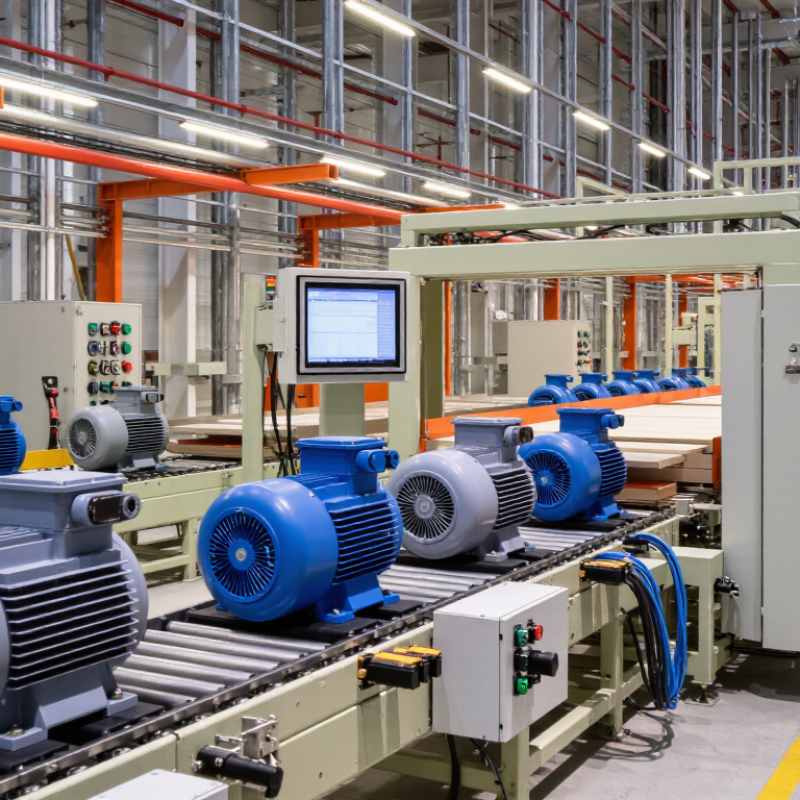
Variable speed motors are designed to change rotational speed according to a machine’s workload. Unlike fixed-speed motors, they can reduce energy use, improve process control, and limit mechanical stress. Their operating principle depends on the motor type. In common AC systems, an electronic drive changes the supplied frequency and voltage. Lower frequency usually produces slower rotation. The relationship is practical: motor speed follows electrical frequency, while torque depends on current and magnetic conditions.
During operation, sensors may monitor speed, temperature, or load. The controller then adjusts power within milliseconds. For example, a conveyor can start gently, run slowly during inspection, and accelerate when production increases. This reduces belt shock and may extend bearing life. In real installations, the textbook model is never perfect. Heat, voltage loss, friction, and incorrect settings can affect performance. I have seen a small parameter error create noticeable vibration and unstable speed.
Tips: Match the motor, drive, and load before installation. Check the required speed range, starting torque, cooling method, and enclosure rating. Keep cables properly grounded and inspect ventilation regularly. Do not assume slower speed always saves energy. A heavily loaded motor may overheat when cooling airflow falls. Measure actual current and temperature during commissioning. Simple records often reveal problems earlier than alarms.
Variable speed motors are electric motors whose rotational speed can be adjusted by changing the supply frequency, voltage, current, or commutation sequence. The table below presents ten widely used manufacturer-neutral motor technology categories and their typical operating characteristics, without displaying company or brand information.
| No. | Motor Technology | Operating Principle | Typical Speed Range | Typical Efficiency | Common Speed-Control Method | Typical Applications |
|---|---|---|---|---|---|---|
| 1 | Three-Phase Induction Motor | A rotating magnetic field induces current in the rotor. The rotor follows the field with a small slip, and its speed is controlled mainly by changing the supply frequency. | Approximately 300–3,600 rpm | 85–96% | Variable-frequency drive with voltage and frequency regulation | Pumps, fans, compressors, conveyors, machine tools |
| 2 | Permanent-Magnet Synchronous Motor | Permanent magnets establish the rotor field, while electronically controlled stator currents create torque and maintain synchronous operation without rotor slip. | Approximately 500–6,000 rpm | 90–97% | Closed-loop vector control or field-oriented control | Robotics, elevators, electric vehicles, precision drives |
| 3 | Brushless DC Motor | Permanent magnets are mounted on the rotor, and electronic commutation switches current between stator windings according to rotor position. | Approximately 500–10,000 rpm | 85–95% | Electronic commutation using Hall sensors or sensorless feedback | HVAC blowers, appliances, pumps, compact automation |
| 4 | Synchronous Reluctance Motor | Torque is generated because the rotor aligns its low-reluctance magnetic paths with the rotating stator field. The rotor contains no windings or permanent magnets. | Approximately 500–3,600 rpm | 88–96% | Variable-frequency drive with rotor-oriented control | Industrial pumps, fans, compressors, process equipment |
| 5 | Wound-Rotor Induction Motor | The rotor uses three-phase windings connected through slip rings. External resistance or power-electronic equipment changes starting torque and operating speed. | Approximately 300–3,600 rpm | 80–93% | Rotor-resistance control or variable-frequency drive | Cranes, hoists, mills, crushers, high-inertia machinery |
| 6 | Brushed DC Motor | A commutator and brushes switch armature current mechanically. Speed is adjusted by changing armature voltage, while field current can be varied for extended speed operation. | Approximately 100–4,000 rpm | 75–92% | Armature-voltage control and field weakening | Legacy industrial drives, test equipment, traction systems |
| 7 | Switched Reluctance Motor | The rotor is attracted toward energized stator poles with the lowest magnetic reluctance. Electronic switching synchronizes phase excitation with rotor position. | Approximately 500–15,000 rpm | 80–94% | Position-based power-electronic phase switching | High-speed pumps, compressors, appliances, traction drives |
| 8 | Axial-Flux Permanent-Magnet Motor | Permanent magnets and windings produce electromagnetic torque across an axial air gap, allowing a short axial length and high torque density. | Approximately 500–8,000 rpm | 90–97% | Inverter-based vector control or direct torque control | Electric mobility, compact generators, aerospace auxiliaries |
| 9 | Single-Phase Capacitor-Run Motor | A main winding and an auxiliary winding, separated by a capacitor, create an approximate rotating magnetic field for continuous single-phase operation. | Approximately 900–3,600 rpm | 70–88% | Voltage control, variable-frequency drive, or electronic speed controller | Small fans, blowers, pumps, refrigeration equipment |
| 10 | Universal Motor | Series-connected field and armature windings allow the motor to operate on AC or DC. Speed changes primarily through voltage adjustment and load variation. | Approximately 3,000–20,000 rpm | 60–85% | Phase-angle controller, PWM, or voltage regulation | Power tools, vacuum cleaners, kitchen appliances |
Note: Speed and efficiency figures are typical engineering ranges rather than guaranteed ratings. Actual performance depends on motor size, pole count, load profile, cooling method, inverter settings, operating voltage, and duty cycle.
Compare tested efficiency, torque stability, insulation, temperature limits, service, compatibility, and total operating cost. Sales rankings are incomplete.
A motor may perform well at 50 Hz but behave differently at low speed. Request test curves, noise data, overload limits, and service-life estimates.
No. Savings depend on system design, motor sizing, controls, and commissioning. A promising specification is not measured savings.
Pumps, fans, conveyors, compressors, HVAC systems, and machine tools often benefit. Speed follows demand instead of wasting constant power.
They reduce mechanical shock during starting and stopping. Conveyors can move fragile products smoothly, like bottles crossing a production line.
Check duty cycle, cooling, enclosure rating, cable selection, drive compatibility, and environmental conditions. Heat, dust, humidity, and frequent cycling matter.
Track vibration, current, temperature, torque, and power quality. A dashboard can help, but it may hide a loose terminal or faulty sensor.
A practical model might assign 30% efficiency, 25% reliability, 20% service, 15% compatibility, and 10% price. This model is imperfect.
Include energy use, bearings, cooling parts, controls, downtime, replacement parts, and technician support. A cheap purchase can create expensive interruptions.
Integrated drives, sensors, edge analytics, recyclable materials, safer connectivity, and simpler retrofit packages are gaining attention. Field results still vary.
A Variable Speed Motor is designed to adjust its rotational speed according to changing operating requirements, improving control, energy efficiency, and equipment performance. This summary explains the basic operating principles behind variable speed control, including how electrical input, frequency, torque, and feedback systems work together. It also introduces the key factors used to compare manufacturers worldwide, such as product reliability, efficiency ratings, customization options, control compatibility, safety standards, technical support, and lifecycle cost.
The article reviews the leading global manufacturers without focusing on brand promotion and examines the technologies and applications that support industrial machinery, pumps, fans, compressors, conveyors, and automation systems. It also discusses major market trends, including intelligent control, digital monitoring, energy-saving regulations, integration with renewable power systems, and the growing use of connected industrial equipment. Finally, it considers future developments that may make variable speed solutions more efficient, flexible, durable, and suitable for increasingly automated operations.

 MeshLink Motor