How to Choose an Electric Drive Motor in 2026?

Time:2026-10-21 Author:Charlotte
0%

Choosing an Electric Drive Motor in 2026 requires more than comparing rated power and purchase price. The correct motor must match the vehicle, machine, battery, inverter, cooling system, and working environment. A motor that performs well on a test bench may overheat during repeated hill climbs or constant factory cycling.

Professor James L. Kirtley Jr. has described electric motors as “the workhorses of modern industry.” That observation still matters. The motor sits at the center of the drive system, converting electrical energy into controlled mechanical movement. Its efficiency, torque curve, thermal behavior, and maintenance demands influence the entire project.

This guide examines the practical decisions behind motor selection. It considers continuous torque, peak torque, operating speed, voltage, duty cycle, regenerative braking, enclosure protection, and controller compatibility. It also explains how permanent-magnet, induction, and switched-reluctance motors behave in real applications.

Numbers can mislead.

A high peak-power rating may look impressive, yet it may last only a few seconds. A smaller motor with stronger continuous performance could deliver better results in daily operation. Engineers should review measured data, not marketing claims alone. They should also check service access, replacement parts, acoustic output, and performance at low temperatures.

The process is not perfectly predictable. Installation conditions, load changes, and user habits can expose weaknesses that laboratory testing misses. Careful selection reduces those surprises. It does not remove them entirely.
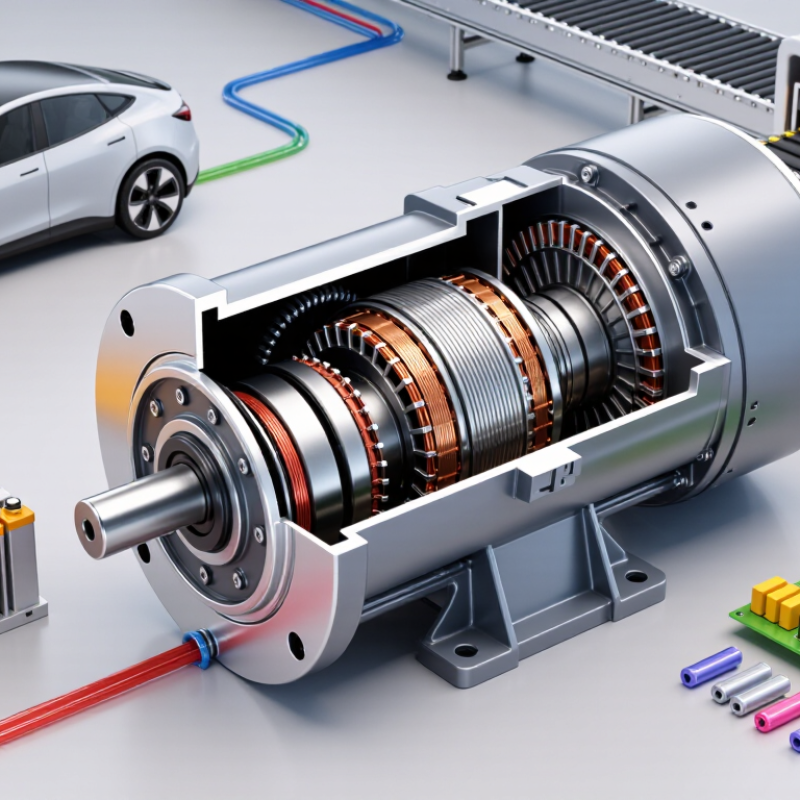
How to Choose an Electric Drive Motor in 2026?

Define the Application, Duty Cycle, and Operating Environment

Choosing an electric drive motor in 2026 starts with the application, not the catalog rating. Define the load, speed range, starting torque, and required acceleration. A conveyor needs steady torque, while a hoist may demand short, severe overloads. In field commissioning, overlooked inertia often causes nuisance trips. The nameplate looked correct.

Duty cycle matters more than peak power. Record running hours, starts per hour, acceleration time, braking events, and idle periods. Match these conditions with the motor’s duty classification under IEC 60034-1. Continuous duty, intermittent duty, and frequent cycling produce different thermal demands. A motor sized only for average power may overheat during repeated starts. It happens.

The operating environment can quietly change the selection. Measure ambient temperature, altitude, humidity, dust, corrosive vapors, and washdown exposure. Select suitable enclosure protection and confirm cooling performance at reduced air density.

The U.S. Department of Energy’s Motor Systems Market Assessment reports that motor-driven equipment uses about 68% of industrial electricity in the United States. The International Energy Agency estimates electric motor systems consume roughly 53% of global electricity.

Small efficiency losses become expensive at this scale. Variable-speed operation can reduce energy use, but only when the process actually benefits from speed control. A fan, pump, and crusher rarely share the same control strategy. Review measured load data before final sizing, because early assumptions are often incomplete.

Match Motor Type and Drive System to the Required Performance

How to Choose an Electric Drive Motor in 2026?
Match Motor Type and Drive System to the Required Performance

Choosing an electric drive motor starts with the machine’s real workload, not its nameplate power. Measure starting torque, continuous torque, peak speed, duty cycle, and available voltage. A conveyor carrying heavy bins may need strong low-speed torque. A fan usually needs efficient high-speed operation. The difference matters.

Motor type and drive system must work as one unit. Permanent-magnet motors can deliver high power density, but they require precise control and careful thermal design. Induction motors tolerate demanding industrial conditions and remain practical for many applications. A variable-frequency drive should match the motor’s current, voltage, overload, and braking requirements. Check the torque-speed curve, not only the rated kilowatts. Small details matter.

Heat is often the hidden limit. During testing, monitor winding temperature, bearing temperature, and enclosure airflow. Consider dust, moisture, vibration, and frequent reversing. An encoder may improve low-speed control, but it also adds wiring and maintenance points. Regenerative braking can recover energy, yet it may require a braking resistor or suitable energy management. A spreadsheet can still mislead. Real loads rarely behave perfectly. Leave a sensible service margin, but avoid oversizing, which can reduce efficiency and control quality. Validate the selected motor and drive together under the hardest expected operating condition.

How to Choose an Electric Drive Motor in 2026? — Match Motor Type and Drive System to the Required Performance

Use this comparison as a preliminary selection guide. Actual performance depends on motor size, cooling method, duty cycle, operating temperature, control tuning, and mechanical load characteristics.

Motor Type Recommended Drive System Typical Power Range Typical Speed Range Typical Peak Efficiency Torque Characteristics Control and Feedback Requirements Key Advantages Main Limitations Typical Applications Selection Priority
Three-Phase Induction Motor Variable-frequency drive with scalar V/f or sensorless/vector control 0.25 kW to several MW Approximately 500–3,600 rpm at common operating points; higher speeds are possible with suitable design 85–96% Strong starting and overload capability; torque reduces above base speed during field weakening Usually operates without a position sensor; encoder feedback can improve low-speed torque and dynamic response Robust construction, low cost, wide industrial availability, and good tolerance of harsh environments Rotor losses reduce efficiency at partial load; magnetizing current lowers power factor; precise low-speed control can be more complex Pumps, fans, compressors, conveyors, machine tools, and general industrial equipment Best general-purpose choice when durability, cost, and broad power coverage are more important than maximum efficiency
Permanent-Magnet Synchronous Motor (PMSM/IPMSM) Three-phase inverter with field-oriented control; resolver, encoder, or sensorless position estimation 0.1 kW to several hundred kW in common equipment; larger systems are also available Approximately 1,000–6,000 rpm in many applications; high-speed versions can exceed this range 90–98% High torque density and strong low-speed torque; wide constant-power range with interior-magnet designs Requires accurate commutation and rotor-position estimation; thermal monitoring is important for magnet protection High efficiency, compact size, low acoustic noise, and excellent dynamic response Higher motor and inverter cost; permanent magnets can be affected by excessive temperature and fault currents Electric traction, servo systems, robotics, compressors, HVAC equipment, and high-efficiency industrial drives Best when efficiency, compact packaging, fast response, and high torque density justify added control complexity
Brushless DC Motor (BLDC) Six-step electronic commutator or sinusoidal/FOC inverter Approximately 10 W to 100 kW Approximately 500–10,000 rpm, depending on winding and application 85–95% High starting torque and good torque-to-size ratio; six-step control produces more torque ripple than sinusoidal control Hall sensors are common; sensorless operation is possible at moderate and high speed No mechanical brushes, compact design, high efficiency, and relatively simple electronic commutation Torque ripple and electromagnetic noise can be higher; precise control requires appropriate commutation timing Fans, pumps, appliances, light electric vehicles, power tools, and compact automation equipment Best for compact variable-speed equipment where low maintenance and moderate-to-high efficiency are required
Switched Reluctance Motor (SRM) Dedicated asymmetric bridge converter with current profiling and rotor-position control Approximately 0.5 kW to several hundred kW Approximately 1,000–20,000 rpm, depending on design and application 80–93% High starting torque, strong overload capability, and very wide speed range Rotor-position information is normally required; advanced current control is needed to reduce torque ripple Simple and rugged rotor, high-temperature tolerance, and no rotor magnets or rotor windings Acoustic noise, torque ripple, specialized converter requirements, and more demanding control optimization High-speed blowers, pumps, compressors, traction auxiliaries, and harsh-environment drives Best when robustness, high-speed operation, or magnet-free construction is more important than minimum noise
Synchronous Reluctance Motor (SynRM) Variable-frequency inverter with field-oriented control; sensorless operation is common Approximately 1.5 kW to several hundred kW Approximately 750–3,600 rpm at common industrial operating points 88–97% Good efficiency across a broad load range; torque density is generally lower than high-performance PMSM designs Requires vector control and accurate rotor-angle estimation; encoder feedback may be used for demanding low-speed operation No rotor magnets, low rotor losses, good high-temperature capability, and high partial-load efficiency Lower power factor and torque density than many PMSM designs; requires a suitable inverter and control algorithm Pumps, fans, compressors, conveyors, and energy-saving industrial motor replacements Best when high efficiency is required without permanent magnets or when operating cost is a major concern
Brushed DC Motor DC chopper, H-bridge, or thyristor-based DC drive Approximately 10 W to several hundred kW Approximately 500–5,000 rpm, depending on motor construction 75–92% Excellent starting torque and straightforward speed control; torque is approximately proportional to armature current Usually no electronic rotor-position sensor is required; current and speed feedback improve regulation Simple control, strong starting torque, and easy reversal with an H-bridge or polarity-controlled drive Brush and commutator wear, maintenance requirements, electrical arcing, and limited suitability for explosive or dusty areas Legacy industrial equipment, actuators, laboratory systems, and applications requiring simple DC control Best for existing DC infrastructure or simple systems where maintenance access is easy and brush wear is acceptable

Practical matching rule: Select the motor according to continuous torque, peak torque, base speed, maximum speed, duty cycle, ambient conditions, braking requirements, and available supply voltage. The drive must be rated for the motor's continuous current and peak current, while also supporting the required feedback method and overload profile.

Calculate Power, Torque, Speed, and Efficiency Requirements

How to Choose an Electric Drive Motor in 2026?

Calculate Power, Torque, Speed, and Efficiency Requirements

Start with the machine, not the motor catalog. Measure the real load. Record mass, friction, incline, acceleration time, and operating cycles. For rotating equipment, calculate speed and torque at the shaft. Mechanical power follows this formula:

P(kW) = T(Nm) × rpm ÷ 9550

A conveyor needing 120 Nm at 900 rpm requires about 11.3 kW before losses.

Acceleration can change the answer sharply. Add acceleration torque to the steady load torque. The required value is often

T = Tload + Jα

where J represents inertia and α represents angular acceleration. For linear motion, include pulley radius, screw pitch, and reflected inertia. My early estimates were too optimistic because I ignored starting friction. That mistake matters.

Efficiency affects both motor size and electrical demand. If the mechanical output is 8 kW and total efficiency is 88%, the input demand approaches 9.1 kW. Check efficiency at the actual speed and load, not only the rated point. Select continuous and peak ratings separately. A motor may survive a short overload but overheat during repeated cycles.

Leave thermal headroom for a hot enclosure, high ambient temperature, and poor ventilation.

Do not guess. Test a prototype with a torque sensor, current meter, and temperature probe. Compare measured values with calculations, then revise the assumptions. A conservative margin helps, but an oversized motor can reduce efficiency, increase cost, and weaken control at light loads.

Compare Control Features, Cooling Methods, and Protection Ratings

How to Choose an Electric Drive Motor in 2026?

Electric motor systems consume about 53% of global electricity, according to the International Energy Agency’s Energy Efficiency 2023 report. Control quality therefore affects both output and operating cost. Choose a drive with closed-loop speed control when load changes quickly. An encoder can maintain speed within tight limits, but it adds wiring and maintenance. Sensorless control costs less, yet low-speed accuracy may suffer. Include overload protection, current limiting, regenerative braking, and Safe Torque Off where machine risk requires it. These features matter more than a long feature list.

Cooling is equally practical. IEC 60034-6 classifies methods such as totally enclosed fan cooling and water cooling. A fan-cooled motor suits clean, moderate environments. Dust, oil mist, and frequent starts can reduce its thermal margin. Water cooling offers compact power density, but leaks and pump failure need monitoring. The U.S. Department of Energy’s Motor Systems Market Assessment reports that motor-driven equipment uses roughly 60% of industrial electricity in the United States. Small efficiency losses become expensive at scale. My own selection mistake has been trusting nameplate power without checking ambient temperature and duty cycle.

Protection ratings should match the real installation, not an ideal laboratory. Under IEC 60529, IP65 resists dust ingress and water jets, while IP67 supports temporary immersion under specified test conditions. Neither rating guarantees resistance to chemicals or continuous underwater operation. Check cable glands, shaft seals, and enclosure temperature together. Also compare maintenance access. A highly protected motor that takes hours to inspect may be the wrong choice.

Evaluate Installation, Maintenance, Safety, and Total Ownership Cost

How to Choose an Electric Drive Motor in 2026?

Installation is the first ownership test. Measure the available footprint, shaft height, cable route, ambient temperature, and load profile before choosing power. The U.S. Department of Energy reports that motor-driven equipment uses about 68% of industrial electricity. A small efficiency gain can therefore affect operating budgets. Check starting torque, speed control, braking needs, and compatibility with the existing drive. A motor that fits the datasheet may still fail on the factory floor.

Maintenance planning matters just as much. Use accessible bearings, replaceable sensors, and clear diagnostic data. Vibration, temperature, and current readings can expose misalignment before a hot bearing stops production. The International Energy Agency identifies motor systems as a major global efficiency opportunity, with system-level improvements often delivering larger savings than motor replacement alone. That detail is easy to miss. Schedule inspections around real duty cycles, not calendar habits.

Safety and total cost require equal attention. Follow IEC 60204-1 and NFPA 70E principles for guarding, isolation, grounding, and arc-flash risk assessment. Confirm that technicians can lock out the equipment without reaching across moving parts. Purchase price is only a small portion of ownership; DOE guidance indicates that energy can represent more than 90% of a motor’s lifecycle cost. Include electricity, downtime, spare parts, training, disposal, and commissioning. My practical warning is simple: the cheapest quotation may become the most expensive installation. Test assumptions with measured load data.

FAQS

What should be defined before selecting an electric drive motor?

Define the load, speed range, starting torque, acceleration, and braking needs. A conveyor usually needs steady torque. A hoist may need brief, severe overloads. Measure inertia carefully. I once trusted the nameplate too much.

Why is duty cycle important when choosing a motor?

Record running hours, starts per hour, acceleration time, braking events, and idle periods. Repeated starts create extra heat, even when average power looks acceptable. A motor can overheat during cycling. It happens.

How does the operating environment affect motor selection?

Check temperature, altitude, humidity, dust, corrosive vapors, and washdown exposure. Reduced air density can weaken cooling performance. Dust may collect around cooling openings like a felt blanket. Measure the site, not just the room.

When is closed-loop speed control useful?

Closed-loop control helps when loads change quickly or speed accuracy is critical. An encoder improves low-speed control but adds wiring and maintenance. Sensorless control costs less, though accuracy may decline at low speeds. The cheaper option is not always simpler.

How should cooling and enclosure protection be selected?

Fan cooling suits cleaner, moderate environments. Water cooling supports compact power density but requires leak and pump monitoring. IP65 protects against dust and water jets. IP67 allows temporary immersion under specified test conditions. Neither rating guarantees chemical resistance.

What installation details should be checked before purchase?

Measure the footprint, shaft height, cable route, ambient temperature, and load profile. Confirm shaft alignment and compatibility with the existing drive. A motor may fit the drawing but fail on the factory floor. Measure it first.

What maintenance features improve motor reliability?

Choose accessible bearings, replaceable sensors, and clear diagnostic data. Monitor vibration, temperature, and current during real operation. These readings can reveal misalignment before a bearing becomes dangerously hot. Calendar-only maintenance may miss the actual problem.

How should safety and ownership cost influence the decision?

Provide guarding, isolation, grounding, lockout access, and suitable arc-flash controls. Technicians should not reach across moving parts to isolate equipment. Compare electricity, downtime, spare parts, training, disposal, and commissioning costs. Purchase price is only one small piece. I still underestimate commissioning time sometimes.

Conclusion

Choosing the right Electric Drive Motor in 2026 begins with a clear understanding of the application, duty cycle, load profile, and operating environment. Consider whether the motor will face continuous, intermittent, or demanding variable-speed operation, as well as exposure to heat, moisture, dust, vibration, or corrosive conditions. These factors help determine the appropriate motor type and drive system. Next, calculate the required power, torque, speed range, starting performance, and efficiency to ensure reliable operation without unnecessary oversizing or energy loss.

A complete evaluation should also compare control features, cooling methods, and protection ratings. Advanced control may improve speed regulation, energy efficiency, and system responsiveness, while suitable cooling and enclosure protection can extend service life. Finally, assess installation requirements, maintenance accessibility, operational safety, and total ownership cost, including energy use, servicing, downtime, and replacement needs. A balanced decision based on both performance and long-term value will produce a dependable, efficient, and practical motor solution.

Charlotte

Charlotte

Charlotte is a seasoned marketing professional with a deep understanding of the company's portfolio and a passion for elevating its presence in the market. With a keen eye for detail and a commitment to excellence, she ensures that our professional blog is regularly updated with insightful articles......