Choosing the best China High Torque Gear Motor supplier requires more than comparing catalog prices. Torque must remain stable under load, heat, repeated starts, and long operating hours. A motor that turns smoothly in a showroom may struggle beside a dusty conveyor or inside a hot packaging line.
The International Energy Agency reports that electric motor systems consume approximately 46% of global electricity. The U.S. Department of Energy’s 2021 Motor Systems Market Assessment also links motor-driven equipment to nearly 70% of industrial electricity use in American manufacturing. These figures make efficiency, service life, and maintenance measurable business concerns. Austin Hughes and Bill Drury, authors of Electric Motors and Drives, describe the motor as “an energy converter.” The gearbox determines how effectively that conversion becomes usable torque.
A reliable supplier should provide verified torque curves, duty-cycle data, thermal limits, gear ratios, insulation classes, IP ratings, and documented load testing. Ask for real application references, not only polished brochures. Check whether the supplier can maintain backlash control after thousands of operating hours. It matters.
China has capable manufacturers, but quality varies between factories, product families, and production batches. ISO 9001 certification is useful, yet it does not replace independent testing or a factory audit. A lower quotation may hide weaker bearings, inconsistent lubrication, or limited after-sales support. That risk deserves attention.
This guide compares China’s leading suppliers through engineering capability, customization, testing evidence, delivery reliability, and lifecycle value. The answer may not be the cheapest supplier. It may be the one that still delivers stable torque when the machine is dirty, overloaded, and far from the service center.
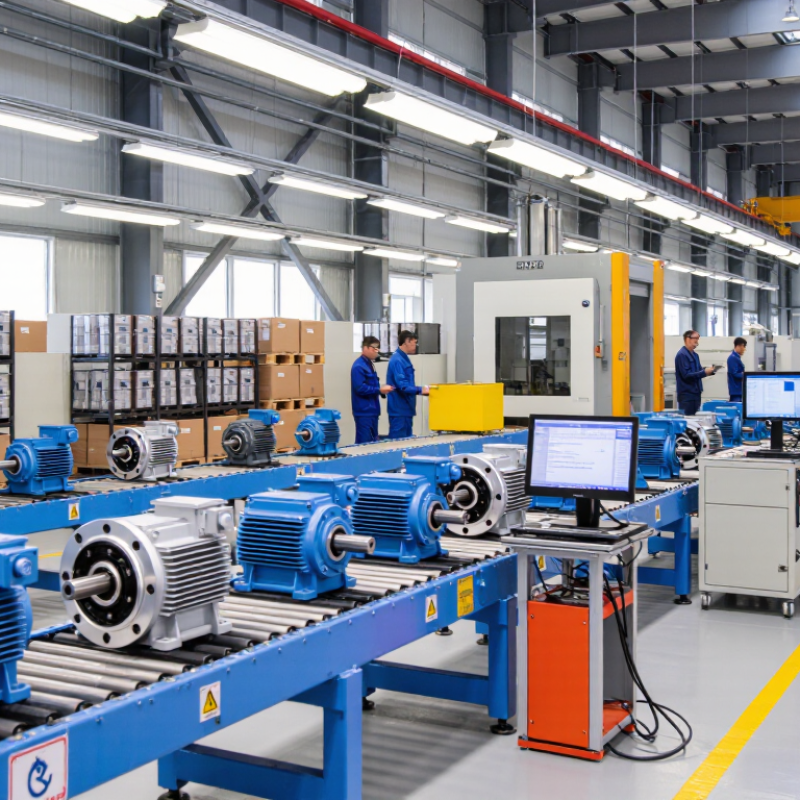
What Is the Best China High Torque Gear Motor Supplier?
What Defines a High-Torque Gear Motor?
A high-torque gear motor combines an electric motor with a reduction gearbox. The gearbox lowers speed and multiplies output torque. This matters when conveyors start under heavy loads or mixers resist sudden movement. Rated torque is only one part of the definition. Engineers should check continuous torque, peak torque, service factor, and thermal limits. A motor may deliver high torque briefly, then overheat during repeated cycles.
The U.S. Department of Energy reports that motor-driven equipment uses about 68% of industrial electricity. Efficiency deserves equal attention. IEC 60034-30-1 provides efficiency classes for electric motors, helping buyers compare performance more reliably. In practice, a supplier should provide torque-speed curves, gearbox ratios, efficiency data, noise readings, and temperature-rise results. Test conditions must be clear. Otherwise, impressive figures can mislead.
Real applications reveal weaknesses quickly. A 90-degree conveyor start can expose poor lubrication or excessive backlash. A lifting system can reveal whether the brake and gearbox were correctly matched. One common mistake is selecting torque from the running load only. Starting torque, shock loads, duty cycle, and ambient temperature also matter. Even experienced teams sometimes underestimate acceleration demand. Therefore, a dependable Chinese supplier should support sample testing, traceable inspection records, and long-term load verification before large-volume purchasing.
| Evaluation Dimension | Typical Technical Reference | Why It Matters | What a Reliable Supplier Should Provide |
|---|---|---|---|
| Definition of High Torque | There is no single universal torque threshold. A gear motor is considered high torque when it delivers substantial output torque at a relatively low output speed for its motor size and frame envelope. | Torque must be judged against speed, power, physical size, duty cycle, and application load rather than as an isolated number. | Clear output torque ratings, speed conditions, duty assumptions, and allowable peak-load information. |
| Output Torque | Specified in N·m. Continuous torque, intermittent torque, and peak torque should be listed separately. The required value depends on load, acceleration, friction, and safety margin. | Continuous torque prevents overheating during normal operation, while peak torque supports starting, acceleration, and short overload events. | Verified torque curves or test data covering the requested speed range. |
| Output Speed | Common geared output speeds range from below 10 rpm to several hundred rpm, depending on the reduction ratio and motor speed. | For a given power level, lower output speed generally permits higher output torque, but excessive reduction can increase size, losses, and backlash. | Available gear ratios, rated output speeds, no-load speed, and speed-tolerance information. |
| Torque–Power Relationship | T = 9550 × P ÷ n, where T is torque in N·m, P is power in kW, and n is rotational speed in rpm. Gearbox losses must be considered in practical calculations. | This formula shows why torque rises as output speed decreases when power remains constant. | Motor power, gearbox efficiency, rated speed, and calculated output torque presented consistently. |
| Gearbox Type | Helical Planetary Worm Bevel Spur | Helical and planetary designs are commonly selected for efficiency and torque density. Worm gears can provide high reduction in a compact layout but may have lower efficiency. | Application-based gearbox recommendations rather than a one-size-fits-all product proposal. |
| Gearbox Efficiency | Typical efficiency varies by design, ratio, lubrication, load, and operating speed. Helical and planetary gearboxes are often more efficient than worm gearboxes under comparable conditions. | Efficiency affects output torque, heat generation, energy consumption, and required motor power. | Efficiency data measured at defined ratios, speeds, temperatures, and load points. |
| Service Factor | A service factor above 1.0 is commonly applied when the load includes shock, frequent starts, long operating hours, or variable loading. The exact value must be calculated from the application. | It helps prevent premature gear, bearing, and shaft failure when actual operating conditions are more severe than the nominal load. | A sizing calculation that considers operating hours, starts per hour, load variation, shock, and ambient conditions. |
| Duty Cycle | Continuous duty is commonly identified as S1 under IEC motor-duty classifications. Intermittent and short-time applications require different thermal calculations. | Torque capacity is not sufficient if the motor or gearbox cannot dissipate heat during the required operating cycle. | Permitted duty classification, thermal limits, rest periods, and overload duration. |
| Motor Technology | AC induction, permanent-magnet, brushless DC, and brushed DC motors can all be combined with gearboxes. The best option depends on control, speed range, efficiency, and cost requirements. | Motor selection affects starting torque, controllability, efficiency, noise, maintenance, and integration with the control system. | Motor curves, starting-current data, control requirements, and compatibility with the intended power supply. |
| Peak and Starting Torque | Starting torque is the torque available during acceleration; peak torque is the short-duration maximum. Both should be distinguished from continuous rated torque. | Conveyors, lifting mechanisms, indexing systems, and machinery with high inertia may require considerably more starting torque than running torque. | Acceleration calculations, rotor-inertia data, overload limits, and protection recommendations. |
| Backlash and Positioning | Backlash depends on gear geometry, manufacturing precision, reduction ratio, bearing arrangement, and preload. Precision planetary and specialized geared solutions generally offer lower backlash than basic gearboxes. | Low backlash is important for indexing, robotics, servo positioning, and reversible motion. | Backlash measured under a stated test method, load condition, and angular position. |
| Shaft and Bearing Capacity | Output shafts must withstand radial load, axial load, torsional load, and bending moments within their specified limits. | A gearbox may meet the torque requirement but still fail if an external pulley, sprocket, or belt creates excessive shaft loading. | Permitted radial and axial loads, bearing-life calculations, shaft dimensions, and mounting guidance. |
| Protection and Environment | Ingress protection should match the application. For example, IP54 offers limited dust and splash protection, while higher ratings provide greater protection when properly designed and tested. | Dust, water, chemicals, vibration, and temperature can significantly reduce service life. | Declared IP rating, operating-temperature range, humidity limits, corrosion protection, and application restrictions. |
| Noise and Vibration | Noise depends on gear profile, surface finish, bearing quality, lubrication, motor speed, assembly accuracy, and load. | Low noise and stable vibration are important in automated equipment, indoor machinery, and operator-facing products. | Noise and vibration test conditions, balancing procedures, and acceptance limits. |
| Materials and Manufacturing | Common components include hardened or alloy-steel gears, steel shafts, aluminum or cast housings, and sealed bearings. Material choice varies with torque, temperature, and service life. | Material quality and heat treatment directly influence tooth strength, wear resistance, fatigue life, and dimensional stability. | Material specifications, heat-treatment details, dimensional inspection records, and traceability. |
| Testing and Quality Control | Relevant checks may include no-load running, rated-load testing, temperature rise, insulation resistance, vibration, noise, leakage, and dimensional inspection. | Testing confirms that the delivered unit performs consistently under defined conditions. | Inspection plans, calibration records, sample test reports, and documented corrective-action procedures. |
| Standards and Compliance | Motor and gearbox documentation may reference applicable IEC, ISO, or other regional requirements. The correct standard depends on the product and destination market. | Compliance supports safety, interchangeability, documentation quality, and market access. | Applicable declarations, technical files, safety information, and certificates that can be verified for the specific configuration. |
| Customization Capability | Potential options include gear ratio, shaft geometry, mounting position, connector, brake, encoder, winding, cable length, housing, and sealing arrangement. | Customization can improve mechanical integration and reduce the need for additional adapters. | Engineering drawings, sample approval, change-control procedures, and clear limits on customization. |
| Supply Reliability | Important indicators include stable component sourcing, documented production capacity, process control, spare-parts availability, and consistent revision management. | Reliable supply reduces downtime and avoids performance variation between production batches. | Production lead-time estimates, quality agreements, batch traceability, packaging controls, and after-sales support. |
| Total Cost of Ownership | Evaluate purchase price together with efficiency, maintenance, expected service life, energy use, replacement time, installation effort, and spare-part cost. | The lowest initial price may not produce the lowest lifetime cost, especially in continuous-duty or high-load applications. | A transparent quotation with technical scope, warranty terms, recommended spares, and lifecycle assumptions. |
| Recommended Selection Process | Define load torque, output speed, duty cycle, starts per hour, ambient conditions, mounting constraints, control method, and required service life before comparing suppliers. | Standardized requirements make supplier quotations technically comparable and reduce the risk of under-sizing. | A completed technical specification, application review, prototype validation, and documented final acceptance criteria. |
Rated torque matters more than peak torque for continuous workloads. Peak torque may last only briefly. Check output torque, starting torque, and the safety factor separately. Do not guess.
The gear ratio changes output speed, force, and motor temperature. Confirm speed under real load, not only without load. A fast catalog figure may disappear during production.
Rated voltage, current, and power must match the controller and battery system. Also check stall-current limits. A mismatch can cause overheating, shutdowns, or unstable operation.
Request duty-cycle data and thermal test results. Run the motor under its actual load for repeated cycles. Measure housing temperature after operation. Heat is easy to underestimate.
Compare shaft diameter, mounting holes, bearing capacity, and keyway design. These dimensions must fit the machine frame precisely. A small mismatch may require an expensive redesign.
Backlash matters when accurate positioning is required. Lifting equipment and automated machinery are common examples. Test movement under load, not only by turning the shaft by hand.
Request samples and test startup torque, temperature rise, vibration, and current draw. Use your actual load and operating cycle. A promising prototype may weaken after several weeks. I would not skip endurance testing.
Review sample consistency, inspection records, component traceability, and response procedures. Ask how winding quality and gear alignment are controlled. Check warranty and replacement terms. Price alone is a poor decision tool.
Choosing the best China High Torque Gear Motor supplier requires more than comparing prices. A High Torque Gear Motor is defined by its ability to deliver strong, stable rotational force under demanding loads while maintaining reliable performance, efficient operation, and controlled heat generation. When evaluating suppliers, buyers should examine manufacturing capabilities, quality management, testing procedures, production experience, communication, and delivery reliability. Technical specifications such as rated torque, speed range, gear ratio, motor power, efficiency, noise level, duty cycle, voltage, protection rating, and service life should match the application’s actual requirements.
A practical supplier comparison should balance quality, customization, and total cost rather than focusing only on the lowest quotation. Important factors include material selection, gear accuracy, bearing quality, dimensional consistency, sample testing, warranty terms, and after-sales support. The ideal supplier should be able to customize shaft designs, mounting configurations, electrical parameters, and control options while maintaining consistent quality. By clearly defining operating conditions and verifying technical documentation, customers can select a dependable partner whose motor performance, pricing, production capacity, and long-term support align with their application needs.

 MeshLink Motor