Industrial gear motors are becoming strategic components in factories, warehouses, packaging lines, and renewable-energy equipment. Their role is practical: they convert motor speed into controlled torque, often inside a compact housing exposed to dust, heat, vibration, and continuous loading. Buyers now compare more than rated power. They examine efficiency, thermal capacity, service factors, noise, sealing, maintenance access, and regional support.
The International Energy Agency reports that electric motor systems consume roughly half of global electricity. The U.S. Department of Energy also identifies motor-driven systems as major electricity users in manufacturing. These findings make Industrial Gear Motor selection an energy and reliability decision, not merely a purchasing task. Recent market studies from Grand View Research and Mordor Intelligence indicate continued growth in gear motor demand, driven by automation, material handling, food processing, and efficient production systems. Their market boundaries differ, however. Report numbers should be compared carefully.
As gear-design authority Darle W. Dudley wrote, “Gears are among the oldest and most useful mechanical devices.” That usefulness still depends on correct application. A helical unit may suit conveyors requiring quiet, efficient operation. A worm gear motor may provide compact reduction and high holding capability, but efficiency can fall under certain ratios. Planetary designs deliver high torque density, often at higher cost.
No single type fits every plant. Some buyers still overfocus on purchase price. That can be an expensive mistake. This 2026 guide evaluates the leading Industrial Gear Motor types for global buyers, connecting technical performance with operating conditions, supplier credibility, lifecycle cost, and realistic maintenance needs. Yet specifications alone cannot predict every failure. Field experience still matters.
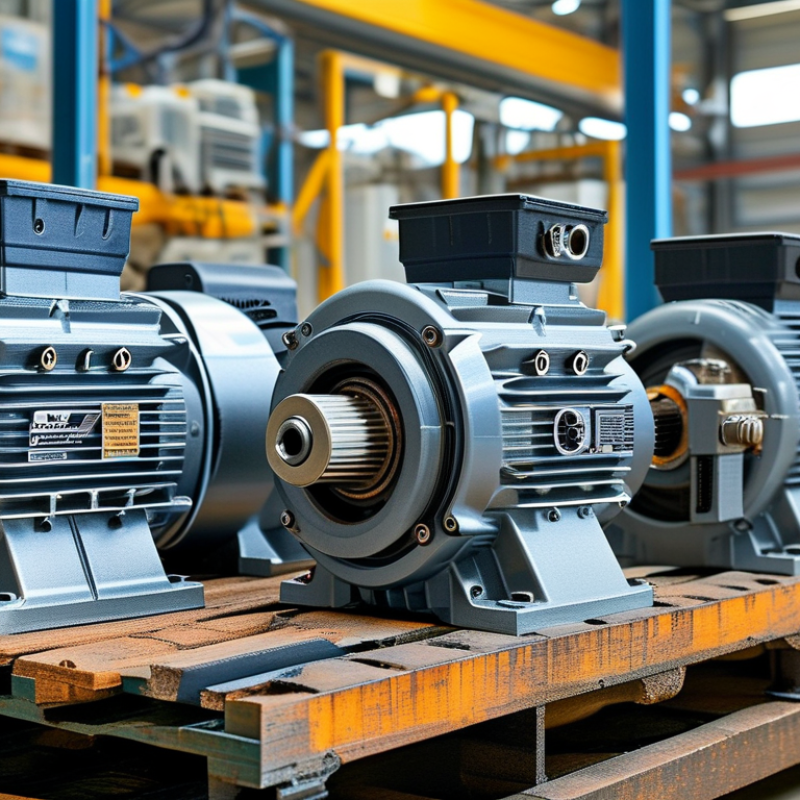
2026 Top Industrial Gear Motor Types for Global Buyers
Industrial gear motors combine an electric motor with a reduction gearbox, converting speed into usable torque. Common types include helical, bevel-helical, worm, planetary, and parallel-shaft designs. Each behaves differently under load. Helical units suit conveyors and mixers, while planetary units handle high torque in compact spaces. Worm gear motors are economical, but their sliding contact can increase heat and reduce efficiency.
The selection process should begin with torque, output speed, duty cycle, shock load, and installation space. The International Energy Agency reports that electric motor systems consume about 53% of global electricity. Small efficiency gains therefore matter at production scale. A gearbox operating continuously near its thermal limit may fail before its calculated service life. That detail is often missed.
Check motor efficiency, gearbox ratio, enclosure rating, lubrication method, noise limits, and local electrical requirements. IEC 60034 provides a useful reference for motor performance and efficiency classification. Protection ratings should match dust, moisture, and washdown exposure. A clean spreadsheet can still hide poor alignment. Field measurements, including vibration, temperature, and startup current, make the final choice more reliable. The U.S. Department of Energy also emphasizes system-level assessment, because oversized motors and throttled equipment waste energy. In practice, the cheapest purchase price is rarely the lowest lifetime cost. That assumption deserves reconsideration.
| Gear Motor Type | Operating Principle | Typical Gear Ratio | Typical Efficiency | Typical Output Torque Range | Key Strengths | Common Industrial Applications | Primary Selection Considerations |
|---|---|---|---|---|---|---|---|
| Helical Gear Motor | Helical gears transmit power through angled teeth, providing smooth and continuous tooth engagement. | Approximately 3:1 to 100:1 | Approximately 90% to 97% | About 50 to 18,000 N·m | High efficiency, low operating noise, compact construction, and reliable continuous-duty performance. | Conveyors, packaging lines, mixers, material-handling systems, process equipment, and general machinery. | Required output speed, continuous duty cycle, radial load, service factor, mounting position, and noise limits. |
| Bevel Helical Gear Motor | Combines helical stages with bevel gearing to transmit motion through a right-angle output arrangement. | Approximately 3:1 to 200:1 | Approximately 90% to 96% | About 200 to 50,000 N·m | High torque density, efficient right-angle power transmission, and flexible machine layout. | Conveyors, palletizers, bottling equipment, automated storage systems, crushers, and bulk-material handling. | Output direction, shock loading, starting torque, shaft arrangement, brake requirements, and available installation space. |
| Parallel Shaft Gear Motor | Uses helical or spur gear stages with input and output shafts arranged parallel to each other. | Approximately 3:1 to 200:1 | Approximately 90% to 97% | About 100 to 30,000 N·m | Space-efficient widthwise layout, high torque capacity, and suitability for conveyor drive systems. | Belt conveyors, roller conveyors, feeders, textile machinery, packaging systems, and warehouse equipment. | Available side clearance, overhung load, conveyor belt pull, shaft orientation, duty cycle, and braking frequency. |
| Worm Gear Motor | A worm screw meshes with a worm wheel to produce a compact, usually right-angle reduction drive. | Approximately 5:1 to 100:1 | Approximately 50% to 90% | About 10 to 5,000 N·m | Compact right-angle design, high reduction in one stage, low cost, and quiet operation. | Gates, small conveyors, actuators, lifts, turntables, feeders, and light-to-medium-duty machinery. | Efficiency at the selected ratio, heat dissipation, backdriving behavior, duty cycle, ambient temperature, and lubrication. |
| Planetary Gear Motor | Multiple planet gears rotate around a central sun gear while sharing load through an outer ring gear. | Approximately 3:1 to 10,000:1 through multiple stages | Approximately 90% to 98% per stage | About 100 to 1,000,000 N·m | Very high torque density, low backlash options, compact size, and strong load-sharing capability. | Robotics, servo positioning, wind-energy equipment, mobile machinery, hoists, extruders, and heavy automation. | Peak torque, rated torque, backlash, torsional stiffness, shock load, thermal capacity, speed, and precision requirements. |
| Cycloidal Gear Motor | An eccentric bearing drives a cycloidal disc against a ring of stationary pins, distributing load across several contacts. | Approximately 6:1 to 119:1 per stage | Approximately 85% to 95% | About 100 to 50,000 N·m | High shock-load resistance, low backlash, long service life, and strong performance under frequent reversing. | Robotic joints, indexing systems, agitators, conveyors, machine tools, and high-cycle automation. | Reversing frequency, torsional shock, allowable backlash, vibration, mounting accuracy, and overload protection. |
| Spur Gear Motor | Parallel-axis spur gears transmit motion through straight-cut teeth. | Approximately 2:1 to 10:1 per stage | Approximately 94% to 98% per stage | About 0.1 to 2,000 N·m | Simple construction, high mechanical efficiency, easy servicing, and economical production. | Small conveyors, indexing devices, laboratory equipment, vending machinery, and compact automation. | Noise tolerance, speed, tooth loading, lubrication, shock loads, duty cycle, and allowable backlash. |
| Shaft-Mounted Gear Motor | The gearbox mounts directly onto the driven shaft, commonly using a hollow-bore arrangement. | Approximately 5:1 to 100:1 | Approximately 90% to 96% | About 100 to 25,000 N·m | Reduced coupling and foundation requirements, straightforward installation, and compact conveyor integration. | Bulk conveyors, bucket elevators, crushers, feeders, and aggregate-handling systems. | Shaft diameter, torque arm design, belt pull, overhung load, alignment, maintenance access, and backstop needs. |
| Integrated Variable-Speed Gear Motor | Combines a gear reducer, electric motor, and electronic speed-control unit in one coordinated drive package. | Approximately 3:1 to 200:1 mechanical reduction | Approximately 85% to 95% for the complete drive system | About 5 to 10,000 N·m | Adjustable speed, reduced wiring, soft starting, programmable control, and improved process flexibility. | Conveyors, pumps, fans, mixers, packaging machines, and automated production lines. | Input voltage and frequency, control protocol, overload capacity, EMC compliance, braking, cooling, and commissioning requirements. |
: They suit conveyors, packaging lines, mixers, and small lifting systems. Their right-angle layout saves frame space. Useful in crowded equipment.
A single-stage unit may offer ratios from about 5:1 to 100:1. Higher ratios often reduce efficiency. Sliding tooth contact creates heat.
Check duty cycle, starting torque, ambient temperature, and mounting direction. Review lubricant requirements and thermal limits. Compactness alone is not enough.
Sliding contact can generate heat inside a sealed housing. Continuous shock loading increases stress. Catalog conditions may not match the factory floor.
It suits machines requiring 90-degree power transmission and steady torque. Conveyors, mixers, and packaging lines may benefit. Shaft alignment must be accurate.
Misalignment may create noise, heat, and early bearing wear. Dusty facilities also need sealed housings and suitable ingress protection. Small errors matter.
Multiple gears share the load inside a compact body. This supports lifting, indexing, and heavy-duty positioning. They also provide strong torsional stiffness.
No. Compare backlash, service access, lubrication, and thermal limits. A compact design can still create maintenance difficulties. That deserves honest review.
They fit conveyors, feeders, and material-handling systems with limited clearance. Their low-profile design supports efficient power transfer along one axis. Helical gearing can reduce noise.
Use measured load cycles, starting frequency, ambient temperature, and shock data. Verify output torque, service factor, mounting position, and brake requirements. Paper efficiency can mislead.
Choosing the right Industrial Gear Motor is essential for achieving reliable torque, speed control, and long-term efficiency in global industrial equipment. Buyers should begin by evaluating load requirements, duty cycle, operating environment, mounting space, power supply, maintenance needs, and applicable safety standards. Helical gear motors are well suited to continuous-duty applications because they provide efficient power transmission, smooth operation, and dependable performance. Worm gear motors offer a compact solution with high reduction ratios, making them useful where space is limited and controlled output speed is important.
For specialized loads, bevel gear motors support efficient changes in power direction, planetary gear motors deliver high torque density and precision, while parallel-shaft designs provide flexible installation and effective power transfer in confined layouts. Global buyers should compare products based on energy efficiency, rated torque, output speed, thermal capacity, noise, service life, spare-part availability, and total cost of ownership. A balanced evaluation of performance, initial price, maintenance, reliability, and supplier support helps organizations select a gear motor that meets both present operating demands and future production goals.

 MeshLink Motor