Global buyers are entering 2026 with more Mini Gear Motor choices than ever. Planetary, spur, worm, and helical designs now serve compact automation, medical devices, robotics, smart appliances, and inspection equipment. The choice is rarely about size alone. It also depends on torque, noise, efficiency, backlash, duty cycle, voltage, and expected service life.
Industry reports show strong momentum. MarketsandMarkets has projected continued growth in the global gear motor market through 2028, driven by factory automation, material handling, and energy-efficient equipment. Grand View Research has also identified miniature motors as a growing segment, supported by medical technology, consumer electronics, and precision machinery. These figures are useful, but they are not perfect. Report definitions differ. Some include complete drive systems, while others count motors only.
H. Wayne Beaty, an electrical-machine author and motor engineering educator, described the motor as “the heart of any electromechanical system.” That principle remains practical for buyers comparing 2026 products. A 12-volt planetary motor may lift a small actuator smoothly, while a worm gear motor may hold a load without continuous power. A spur motor may cost less, but its noise and backlash can matter. Small details become expensive failures.
This guide examines the top Mini Gear Motor types for global buyers. It compares performance, efficiency, control requirements, sourcing risks, and application fit. There is no universal winner. The most attractive specification sheet may still hide weak thermal performance, inconsistent quality, or limited documentation. Careful testing remains essential.
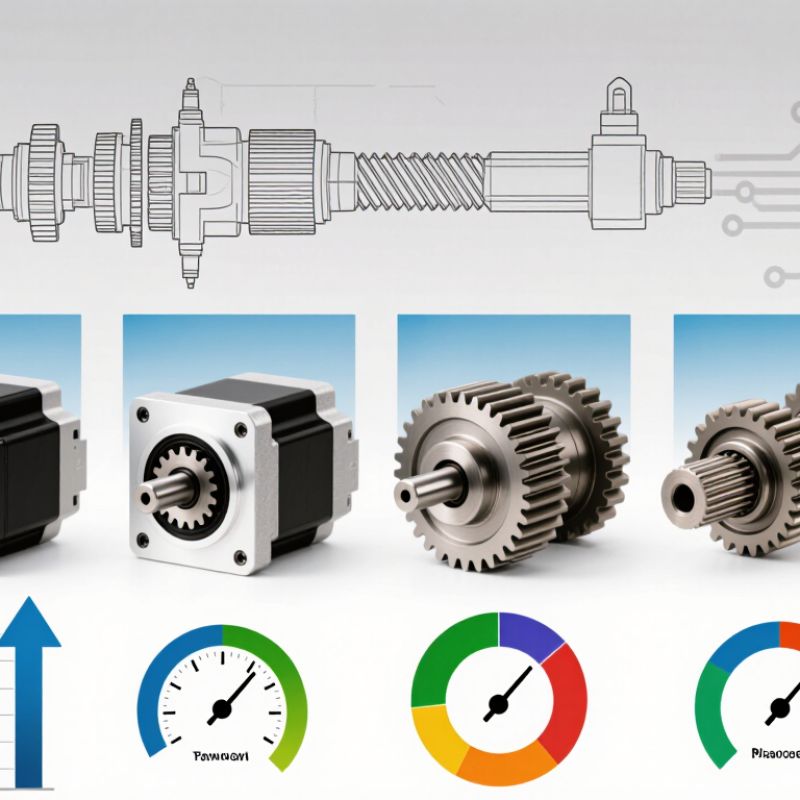
Mini gear motors combine a compact electric motor with a reduction gearbox. The motor spins quickly, while the gears lower speed and increase usable torque. This arrangement drives small conveyors, valves, positioning modules, medical instruments, and smart household mechanisms. A typical unit uses a brushed or brushless motor, gears, bearings, housing, and an output shaft. It is not simply a smaller industrial motor. Gear geometry matters.
When voltage reaches the motor, electromagnetic force turns the rotor. The first gear stage transfers that rotation to a larger gear. Additional stages repeat the reduction, making the output shaft slower but stronger.
For example, a 1,000-rpm motor with a 20:1 ratio may deliver about 50 rpm before losses.
Actual torque is lower than the ideal calculation because friction, heat, and gear clearance consume energy. That detail is often missed.
In practical purchasing work, I check rated torque, stall torque, duty cycle, noise, backlash, and shaft load. A motor that fits the drawing may still fail under repeated starts. Mounting alignment also matters; slight offset can increase bearing wear and vibration. Sealed gears help in dusty environments, but sealing can raise friction and temperature. Datasheets can be incomplete. Request test data for voltage range, efficiency, temperature rise, and life expectancy. These figures improve comparisons, although real applications still require validation.
Mini gear motors in 2026 are not one uniform product category. Spur, planetary, worm, helical, and bevel designs serve different operating conditions. Spur gear motors remain attractive for compact devices because they are simple, affordable, and efficient at moderate loads. Their weakness is noticeable backlash and audible gear noise.
Planetary gear motors deliver higher torque density through several meshing gears. They suit robotic joints, medical mechanisms, and automated grippers where space is limited. Worm gear motors provide strong reduction and useful holding behavior, although their efficiency can fall sharply under heavy reduction ratios. Helical and bevel gear motors improve smoothness and directional flexibility. They often need more careful alignment.
Market data supports continued demand. Grand View Research valued the global gear motors market at approximately USD 27.7 billion in 2023, with growth projected through 2030. The report links expansion to factory automation, material handling, and energy-efficient equipment. Miniature applications are also influenced by battery limits. Every unnecessary watt becomes heat.
Motor choice should match torque, speed, duty cycle, noise, and backlash requirements. Brushless DC gear motors offer long service life, while geared stepper motors provide controlled positioning without complex feedback. Still, the boundary is not always clean. A planetary unit may outperform a worm unit in testing, yet cost, lubrication, and assembly can change the result. Real load testing remains essential. Specs can mislead.
2026 Top Mini Gear Motor Types for Global Buyers
When comparing mini gear motors, torque should match the real load, not only the catalog rating. Measure starting torque, running torque, and stall torque separately. A small conveyor may need high starting torque, especially with cold grease or uneven weight. Planetary gear motors usually provide stronger torque in compact spaces. Spur gear motors often cost less and suit lighter loads. Worm gear motors can hold position, but their efficiency may be lower.
Speed depends on the gearbox ratio and the motor’s rated voltage. A 12V motor may run differently from a 24V model, even with similar specifications. Check the output speed under load, not just the no-load figure. For example, a motor listed at 100 rpm may fall to 72 rpm after installation. That difference matters in pumps, valves, and small robotic joints. Too much speed can create noise, heat, and unstable movement.
Efficiency deserves practical testing. Record input voltage, current, output speed, and torque during normal operation. Then compare useful mechanical power with electrical input. A motor that looks efficient on paper may lose performance through friction, misalignment, or repeated starts. I have seen test results change after only a few minutes of heating. That deserves attention. Buyers should also review duty cycle, shaft load, noise, insulation, and connector safety. Specifications help, but real operating conditions reveal the harder truth.
How to Compare Torque, Speed, Voltage, and Efficiency
The chart compares representative nominal specifications commonly found in compact gear motor categories. Planetary and BLDC gear motors generally provide higher torque density and efficiency, while coreless and brushed DC motors support higher speeds. Actual performance varies with gearbox ratio, load, duty cycle, voltage, and operating temperature.
2026 Top Mini Gear Motor Types for Global Buyers
Choosing Mini Gear Motors for Different Global Applications
Choosing a mini gear motor starts with the application, not the product name. Small conveyor systems often need steady torque and low speed. Robotic joints may require compact planetary gearing, precise positioning, and limited backlash. Battery-powered devices benefit from efficient spur or worm gear motors. The correct voltage must match the control system. Also check starting torque, duty cycle, noise, and expected operating temperature.
A neat specification sheet can still mislead. In practical testing, a motor may reach its rated torque only briefly. Continuous loads need thermal headroom. Dust, moisture, and repeated stalls can shorten service life. For medical, office, or home equipment, smooth operation may matter more than maximum power. For outdoor equipment, sealing and corrosion resistance deserve closer attention. I would not select a motor from speed alone. Gear ratio, shaft load, mounting space, and controller compatibility must work together.
Tips: Measure the real load before choosing. Test the motor under its longest operating cycle. Leave space for heat release. Ask for performance curves, tolerance data, and sample units. A small prototype can reveal vibration, noise, or weak starting performance early. Do not ignore regional voltage differences. That mistake is easy to make.
| Mini Gear Motor Type | Typical Gear Ratio | Typical Output Speed | Typical Continuous Output Torque | Approx. Gearbox Efficiency | Main Advantages | Key Limitations | Recommended Global Applications | Important Selection Factors |
|---|---|---|---|---|---|---|---|---|
| Spur Gear Motor | 3:1–100:1 | 10–1,500 rpm | 0.005–1.0 N·m | 70–90% | Compact, economical, easy to manufacture, and suitable for intermittent or continuous light-duty motion. | Higher noise and vibration than helical designs; tooth loading and wear can increase at high torque. | Small pumps, smart locks, printers, vending mechanisms, laboratory instruments, toys, and compact automation. | Confirm duty cycle, allowable noise, radial load, backlash, and the required ratio in each stage. |
| Planetary Gear Motor | 4:1–1,000:1 | 5–2,000 rpm | 0.02–10 N·m | 80–95% | High torque density, good load sharing, low backlash options, and strong resistance to shock loads. | Usually more expensive and mechanically complex; efficiency decreases as multiple stages are added. | Robotics, medical devices, camera systems, precision actuators, industrial grippers, and battery-powered equipment. | Check peak torque, continuous torque, backlash, bearing capacity, thermal limits, and mounting accuracy. |
| Worm Gear Motor | 10:1–300:1 | 1–300 rpm | 0.03–8 N·m | 35–85% | Large speed reduction in a compact layout; can provide a right-angle drive and increased holding resistance. | Lower efficiency, greater heat generation, and sliding wear; self-locking is not guaranteed and depends on geometry and load. | Valves, conveyors, blinds, seat adjustment, lifting mechanisms, display equipment, and positioning systems. | Evaluate back-driving, lubrication, operating temperature, duty cycle, holding load, and heat dissipation. |
| Helical Gear Motor | 3:1–200:1 | 10–1,200 rpm | 0.01–4 N·m | 80–95% | Smoother and quieter engagement than straight spur gears, with good continuous-duty performance. | Produces axial thrust, needs accurate alignment, and may require additional bearings or thrust management. | Office equipment, smart-home mechanisms, small fans, access systems, packaging equipment, and compact conveyors. | Check axial load, lubrication method, noise target, continuous-duty rating, and shaft orientation. |
| Bevel Gear Motor | 2:1–100:1 | 10–1,000 rpm | 0.02–5 N·m | 75–93% | Changes the direction of power transmission, commonly by 90°, while maintaining a relatively compact package. | More sensitive to alignment and assembly tolerances; often costs more than a basic spur gearbox. | Right-angle actuators, mobile robots, inspection equipment, dispensers, door mechanisms, and compact material-handling systems. | Specify shaft angle, output orientation, radial and axial loads, backlash, mounting space, and shock loading. |
| Planetary-Worm Gear Motor | 30:1–3,000:1 | 0.5–150 rpm | 0.1–15 N·m | 30–75% | Combines high reduction, compact size, high torque density, and increased resistance to back-driving. | Lower overall efficiency, higher cost, and more demanding thermal management than single-stage gearboxes. | Electric actuators, compact lifting units, medical positioning systems, solar trackers, and robotic joints. | Prioritize thermal performance, holding requirements, peak load, operating duration, lubrication, and duty cycle. |
| Magnetic Gear Motor | 3:1–20:1 | 20–1,500 rpm | 0.01–2 N·m | 75–95% | Contactless torque transmission, low mechanical wear, low maintenance, and inherent overload slip protection. | Lower torque density in some compact designs, possible torque ripple, and higher material and assembly costs. | Sealed pumps, cleanroom equipment, chemical handling, food-processing mechanisms, and low-maintenance instruments. | Assess required torque, allowable slip, magnetic temperature limits, sealing requirements, and cost target. |
| Harmonic-Drive Mini Gear Motor | 30:1–160:1 | 1–300 rpm | 0.05–5 N·m | 60–85% | Very low backlash, high reduction from a single stage, and strong positioning accuracy in a compact form. | Higher price, limited tolerance for overload and shock, and lower efficiency than many planetary systems. | Robotic joints, optical positioning, laboratory automation, pan-tilt units, and precision motion platforms. | Check repeatability, backlash, peak acceleration, torsional stiffness, bearing load, and life under reversing motion. |
For global buyers, selecting a mini gear motor is a supply-chain decision, not a catalogue exercise. The practical shortlist includes spur, planetary, worm, and helical designs. Each changes torque, noise, efficiency, backlash, and assembly risk.
Use IEC 60034 terminology when comparing ratings, insulation, temperature rise, and test conditions. A claimed ratio means little without load, speed, and lifetime data. Ask for inspection records, traceability, change-control procedures, and sample approval before volume release.
The 2023 World Bank Logistics Performance Index evaluates 139 economies across customs, infrastructure, and timeliness. Its message is practical: transport reliability can outweigh a small factory price advantage. Calculate landed cost with tooling, duties, packaging, insurance, inventory, and expedited freight.
I have seen sourcing teams overvalue the cheapest quotation. It looked efficient on paper. Later, inconsistent gear noise forced extra inspection and delayed assembly. That outcome is avoidable, though not every risk is visible during sampling.
For 2026 programs, request dual-source options for gears, bearings, magnets, and electronic controls. Confirm RoHS and REACH documentation where applicable, plus destination-market testing obligations.
A small motor with stable documentation may protect production better than a stronger motor with uncertain revisions. Do not accept a perfect forecast. Review supplier capacity, currency exposure, minimum order quantities, and response times quarterly.
A mini gear motor combines a compact electric motor with a reduction gearbox. The motor spins quickly, while the gears reduce speed and increase usable torque. It can drive valves, conveyors, positioning modules, and small household mechanisms. It is not merely a smaller industrial motor.
The motor turns a small gear inside the gearbox. That gear drives a larger gear and reduces rotational speed. Several stages can provide greater reduction. More torque, less speed.
Divide the motor speed by the gearbox ratio. A 1,000-rpm motor with a 20:1 ratio may produce about 50 rpm. Actual speed can be lower because friction and heat consume energy. The ideal calculation is only a starting point.
Compare starting torque, running torque, and stall torque separately. Starting torque matters when loads are heavy or grease becomes cold. Catalog torque may not represent repeated operation. Real testing is safer.
Planetary gearboxes usually provide strong torque in compact spaces. Spur gearboxes often suit lighter loads and may cost less. Worm gearboxes can help hold position, but efficiency may be lower. The best choice depends on load, space, and operating time.
Listed speed may describe no-load performance. A motor rated at 100 rpm might produce only 72 rpm under load. Voltage, friction, shaft load, and gearbox temperature can change results. That difference matters in pumps and valves.
Measure voltage, current, output speed, and torque during normal operation. Compare useful mechanical power with electrical input. Repeat measurements after several minutes of heating. Results may change.
Slight mounting misalignment can increase vibration and bearing wear. Excessive shaft load may damage internal parts. Sealed gears help in dusty areas, but sealing can increase friction and temperature. A motor that fits the drawing may still fail.
Request data for voltage range, efficiency, temperature rise, and expected service life. Also check duty cycle, noise, backlash, insulation, and connector safety. Ask for performance under load, not only no-load figures. Datasheets can be incomplete.
This guide explains what a Mini Gear Motor is, how its motor and reduction gear system work, and why these compact devices are important for precise motion control. It reviews the main types available in 2026, including geared DC, brushless, planetary, spur, and worm gear motors, while highlighting their typical strengths, limitations, and operating characteristics. Buyers will learn how to compare torque, speed, voltage, noise, service life, and energy efficiency according to equipment requirements.
The article also connects motor selection with global applications such as automation equipment, medical devices, smart appliances, robotics, security systems, and portable machinery. It provides practical guidance for matching a Mini Gear Motor to load conditions, duty cycles, installation space, and control systems. Finally, it covers key international sourcing factors, including product consistency, technical documentation, customization capability, quality inspection, packaging, lead times, communication, and supply-chain reliability, helping global buyers make informed and efficient purchasing decisions.
